Programmes & Frameworks
Each programme offered through Taldon addresses a specific dimension of the stress–food relationship. They are structured resources — not personal consultations — drawn from published research in food psychology and behavioural nutrition.

Stress Eating Awareness
A structured introduction to the physiology and psychology of stress-driven eating. Covers cortisol and appetite, the cue-routine-reward loop in comfort eating, and a framework for distinguishing emotional hunger from physical hunger signals.
- The cortisol–appetite connection
- Hunger signal mapping
- Trigger identification workbook
- Response pattern documentation

Mindful Eating Foundations
A structured encounter with mindful eating — not as a restrictive protocol but as an attentional practice. Drawn from published research on eating pace, sensory engagement, and the relationship between attention and satiety signalling.
- Attentional eating principles
- Satiety signal awareness
- Pace and environment factors
- Four-week practice schedule
Meal Planning Under Pressure
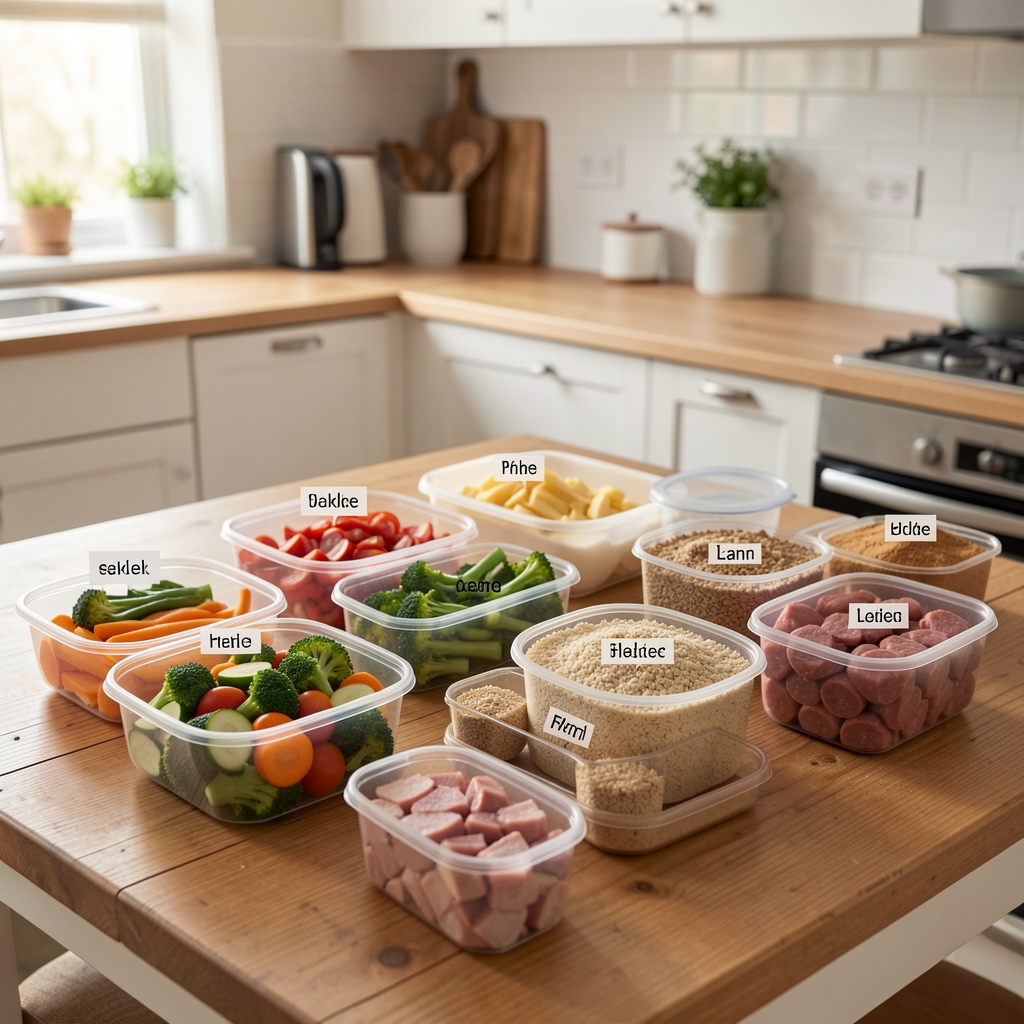
A practical framework for redistributing food decisions to low-stress moments. Addresses decision fatigue, the role of environmental design in eating behaviour, and the research basis for structured preparation as a pressure-management strategy.
- Decision fatigue and food choices
- Environmental design principles
- Weekly planning templates
- Contingency planning for high-stress periods

Intuitive Eating Orientation
An orientation to the ten principles of intuitive eating and their specific relevance to stress-related food behaviour. Covers the research base behind internal cue-led eating and how it differs from both restrictive and reactive food approaches.
- Ten principles overview
- Internal hunger cue rebuilding
- Stress-specific application notes
- Reflection exercises and tracking
Food & Mood Journal Template
A structured daily log for tracking eating moments alongside stress levels, emotional states, and hunger ratings. Designed for pattern recognition, not calorie counting.
Emotional Hunger Mapping Guide
A visual reference guide comparing the characteristics of emotional and physical hunger across onset, location, specificity, and post-eating response. Based on published food behaviour research.
Habit Loop Audit Worksheet
A structured worksheet for identifying the cue, routine, and reward structure behind a specific eating habit. Includes guidance on identifying alternative routines for the same cue.
Weekly Stress & Eating Tracker
A seven-day tracking sheet correlating stress events with eating episodes. Designed to reveal patterns across a week rather than assess individual choices.
Coping Strategy Reference
Eight documented behavioural coping strategies — drawn from the published literature on stress management nutrition — presented as a practical reference card for high-pressure moments.
Research Reading List
An annotated bibliography of key published papers in stress eating, appetite regulation, food psychology, and intuitive eating. Updated quarterly and drawn from peer-reviewed sources.
How to Access Taldon's Resources
Programmes and supporting resources are available following a brief enquiry. This allows us to confirm the resource is suited to your area of interest and to send it in an appropriate format.
All materials are self-guided and can be worked through independently. There is no requirement for ongoing participation or commitment beyond the initial enquiry.

Taldon's programmes are educational resources and do not constitute personal nutritional guidance. We recommend speaking with a qualified wellness or nutrition professional before introducing any significant change to your daily routine, particularly if you have specific dietary requirements. Resources are designed to support understanding and awareness, not to replace professional support.